COSMETIC SOURCING GUIDE
Freeze-dried peptide powder: evaluating moisture and shelf-life evidence
A dry appearance cannot establish shelf life. Review the exact material, container, storage claim and supporting study before accepting a powder’s expiry or retest date.
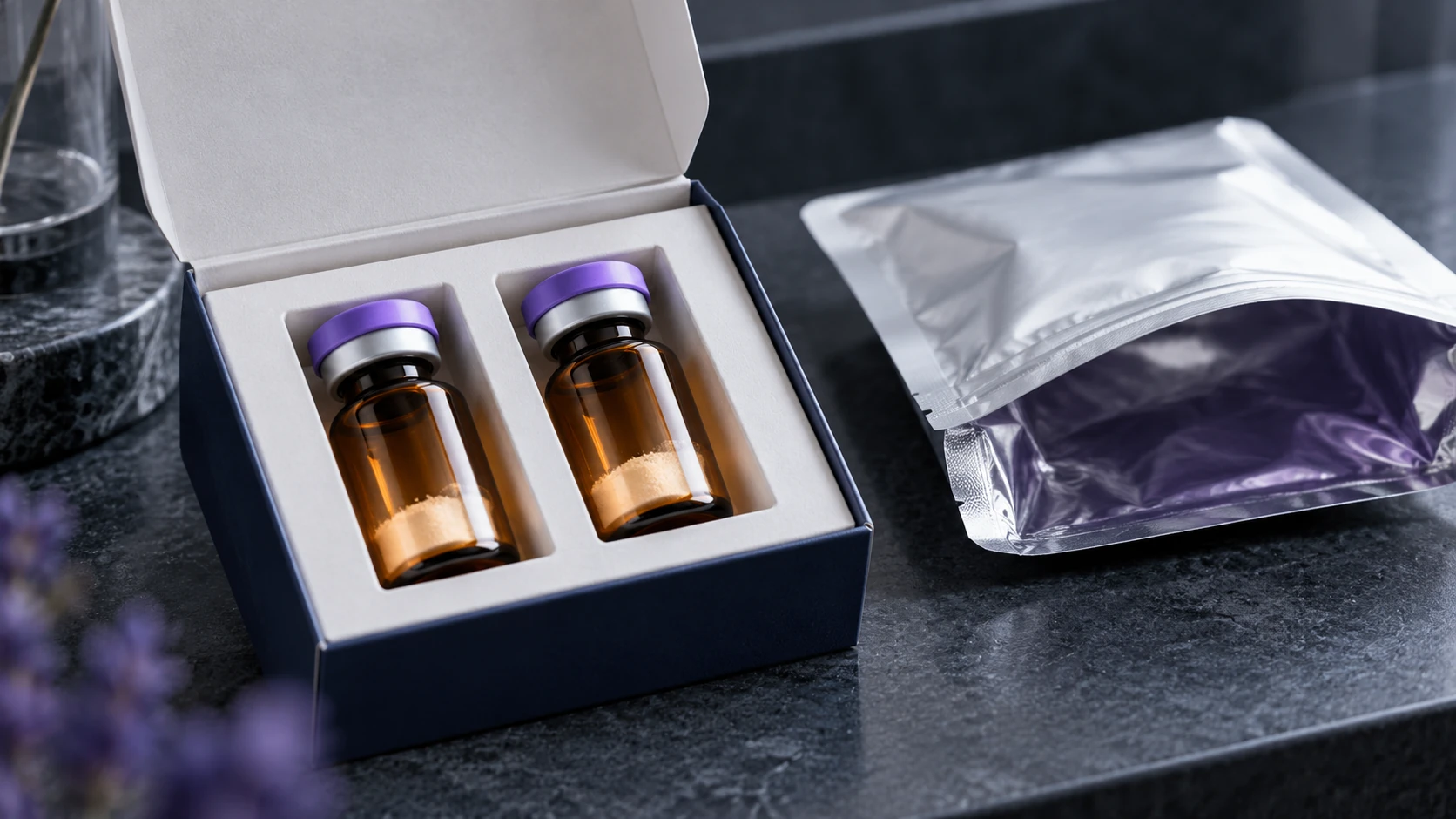
A freeze-dried, or lyophilized, powder’s appearance is not evidence that it will remain within specification for a stated period. A usable shelf-life claim connects a defined material to a defined container, storage condition and body of supporting results.
For a buyer, the task is to check whether those conditions match the offered shipment. A report on a different composition or closure may be relevant background, but it leaves a gap that needs an explicit technical assessment.
Identify what the shelf-life statement actually covers
Separate the unopened supplied powder from an opened container and from a finished cosmetic made with that powder. Each has a different exposure history and product context. A date on the raw-material label cannot automatically become the finished cosmetic’s expiry date.
ISO/TR 18811:2018 provides a framework for cosmetic product stability assessment. Its public abstract explains that a single set of test conditions and criteria cannot cover the variety of cosmetic products. The manufacturer must justify the approach for its product. The document does not provide a universal shelf life for peptide powders.
Write the object of the claim in one sentence
Ask the supplier to identify the material code, composition revision, packaging configuration and unopened storage statement covered by its proposed date. If that sentence cannot be completed, the rest of the review will depend on assumptions.
Then distinguish a manufacturer-supported claim from a distributor’s stock description. A copied storage sentence should be traceable to the actual manufacturer’s current specification or approved instruction.
What to request in a stability evidence summary
| Evidence field | Question for the supplier | Why it affects acceptance |
|---|---|---|
| Material and batch coverage | Which composition and representative batches were evaluated? | A shared family name may hide a different preparation |
| Container and closure | Which primary pack and closure were used? | The delivered presentation should match the supported configuration |
| Storage conditions and duration | What conditions and observation period support the statement? | A duration without conditions cannot be interpreted |
| Quality attributes | Which properties were followed against which criteria? | Appearance alone may leave relevant changes unexamined |
| Report conclusion | Who approved the conclusion and which date does it support? | The buyer needs a controlled decision, not an isolated result |
The summary can reference detailed reports retained by the supplier. It should still allow the buyer’s technical reviewer to understand what was assessed and where the limitations are. If confidentiality prevents full disclosure, agree how the relevant conclusion will be reviewed rather than removing the question from the purchase file.
Moisture data needs a method and a basis
A numerical moisture result should be read with its method reference and acceptance criterion. A water-specific measurement and a broader mass-loss measurement do not necessarily describe the same property. Do not rename one result as another in a comparison spreadsheet.
Also ask whether the reported result belongs to release testing, a stability time point or a sample taken after a particular handling history. These records answer different questions. A satisfactory result at manufacture does not, on its own, establish the condition of material after storage or transport.
The FDA’s cosmetic shelf-life guidance discusses how storage, moisture, temperature, light and air can affect cosmetic products. It does not support a fixed lifespan for every dry ingredient. Use the supplier’s evidence for the actual material rather than borrowing a duration from another product.
Expiry and retest dates lead to different decisions
Expiry date
Confirm what the supplier means by expiry and how the stated storage requirements relate to it. Put the agreed meaning into the specification or purchasing documents so receiving staff do not have to infer it from a label.
Retest date
A retest date should not be read as an automatic extension. Ask who can authorize reassessment, what approved process applies, and which resulting record permits any continued acceptance. Purchasing should not change a date simply because the container still looks intact.
For either type of date, establish the remaining supported period at dispatch or receipt in the commercial agreement. This prevents an otherwise compliant lot from arriving with less usable time than the project requires.
Check the packaging and delivery record together
A closure description is useful only if it matches the item supplied. Link the pack specification to the material record, including relevant outer protection and label instructions. Ask how changes in the closure or pack size are reviewed before shipment.
- Confirm the unopened packaging configuration covered by the supporting evidence.
- Record the storage instruction exactly as approved.
- Define how visible damage or a reported transport deviation will be escalated.
- Keep the affected lot separate from accepted stock while a disposition is pending.
- Retain the supplier’s written decision with the delivery and batch records.
For example, a hypothetical delivery in a different closure should trigger a packaging comparison and technical disposition. It should not be accepted solely because the powder and label look familiar. The supplier may have supporting evidence, but the purchasing file needs that link.
Carry the evidence into the cosmetic project
When the powder becomes part of a finished cosmetic, open a separate assessment for the final composition and packaging. Preserve the ingredient’s original records while documenting the new product’s own conclusions. This avoids presenting raw-material information as a finished-product stability study.
For a cosmetic freeze-dried powder project, send the intended presentation, destination market and required document scope. The quality documentation discussion can then address the actual material and pack. Use the quality agreement guide to assign ownership of stability records and packaging changes before approving production.
Sources and scope
Sources checked on 31 October 2026. The purchasing tools and hypothetical examples in this article are editorial analysis. Refer to the linked authorities for their current text and scope.
Common questions
Does freeze-drying establish a fixed shelf life?
No. A shelf-life conclusion needs evidence for the specific material, packaging and storage conditions. The dry appearance alone does not establish a duration.
Can the ingredient expiry date be used for a finished cosmetic?
It should not be transferred automatically. The finished composition, package and use conditions need their own assessment.
Is a retest date an automatic permission to use older stock?
No. Confirm the supplier’s approved reassessment process and obtain the written disposition applicable to the lot.
What if the delivered packaging differs from the study packaging?
Request a documented assessment linking the supplied pack to the supporting evidence before acceptance. Record the technical decision with the lot.