COSMETIC SOURCING GUIDE
Peptide purity vs peptide content: reading HPLC and assay results
An HPLC area percentage and a peptide mass fraction answer different questions. Compare the measurement, reporting basis and batch identity before comparing a supplier’s headline figure.
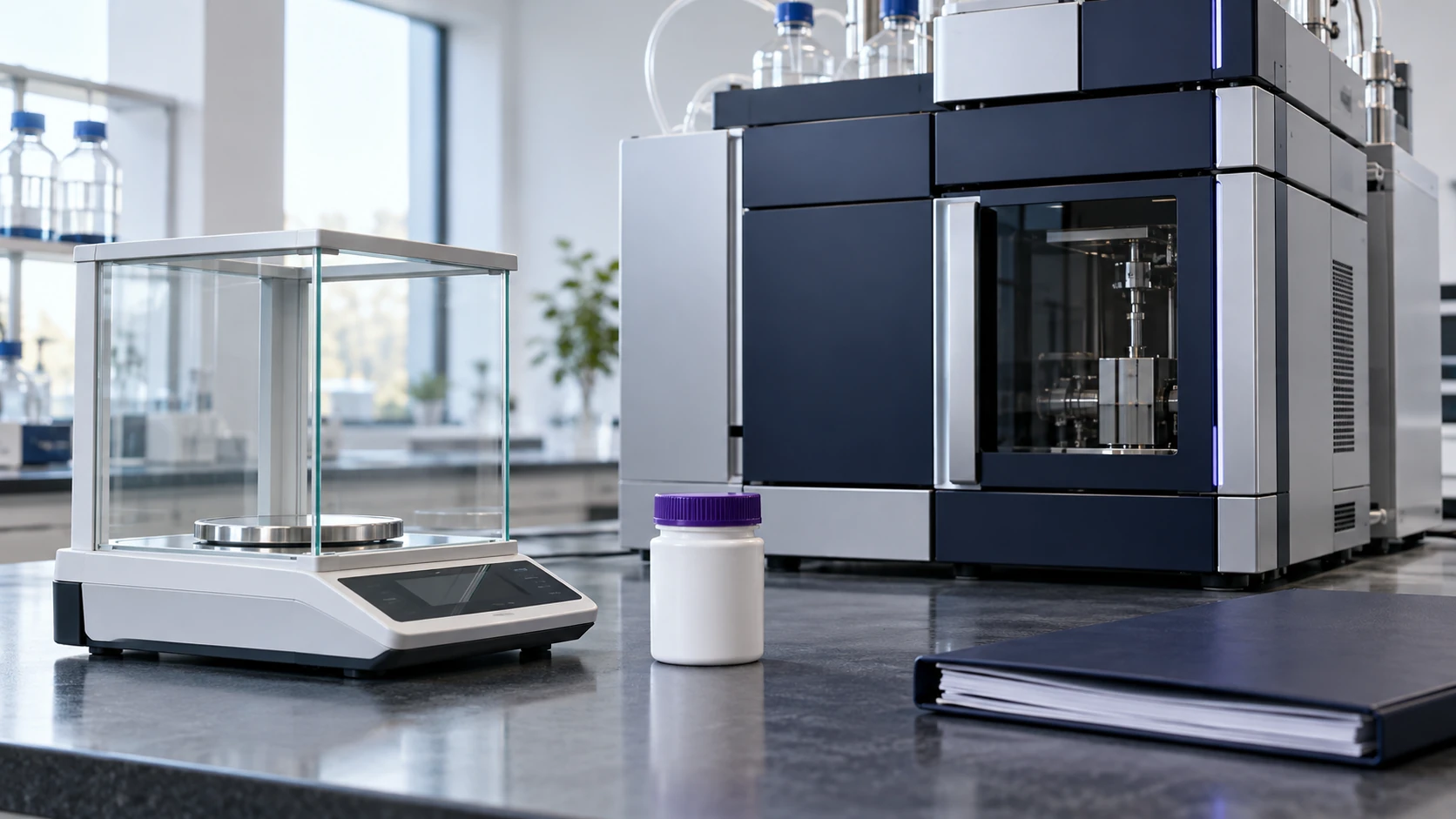
A peptide powder can have a high chromatographic purity result while its peptide content, expressed as a fraction of the supplied powder, is lower. That difference alone does not establish that either result is wrong. The first buying question is what each percentage measures and which material it describes.
For a cosmetic peptide purchase, record the supplied form, batch number and reporting basis beside every result. A percentage copied from a catalogue without those details cannot support a reliable comparison between quotations.
What the three measurements answer
Identity: does the evidence support the named material?
An identity result links a test response to the specified ingredient. A mass-spectrometry result may support molecular identity within the method’s scope. It does not automatically establish the quantity of peptide in the entire container, the absence of every impurity, or suitability for a cosmetic formula. Ask which identity method was used and whether the record belongs to the batch offered for sale.
Chromatographic purity: what contributes to the reported signal?
High-performance liquid chromatography (HPLC) area percentage compares integrated signals under a defined method. Detector response, integration rules and the species the method can detect affect its meaning. A component that is poorly detected does not become absent because it contributes little area. A chromatogram also needs an identified target peak before its area can be interpreted.
Peptide content: how much peptide is in the weighed material?
Net peptide content addresses the peptide portion of the supplied mass. Water and counterions can contribute to that mass. The distinction between content, purity and identity is discussed in Hoofnagle and colleagues’ peptide quantification recommendations. That paper concerns analytical peptide standards; it does not establish an acceptance limit for a cosmetic ingredient.
| Record | Useful buying question | What remains unresolved |
|---|---|---|
| Identity result | Does the tested sample match the stated identity? | Quantity and fitness for the intended project |
| HPLC area % | What fraction of the integrated response is assigned to the target? | Total peptide mass in the supplied powder |
| Content or assay | What is measured, by which method and on which basis? | Whether another supplier reports an equivalent quantity |
| Water or counterion information | Which other components affect the mass basis? | Whether they are included or corrected in the content result |
A purchasing example with two different percentages
Consider a hypothetical quotation describing 100 g of powder with 98% HPLC area purity and 82% peptide mass fraction on an as-supplied basis. If that content definition is confirmed, the arithmetic is 100 g × 0.82 = 82 g of peptide on that defined basis. Multiplying the shipment mass by 98% instead would substitute a chromatographic signal measure for a mass measure.
These figures are invented to explain the comparison. They are not a Pure Peptide Core specification, a batch result or a formulation recommendation. A real comparison also needs the same peptide identity, reporting basis, included components and agreed analytical scope.
If a second quotation reports content on a dry basis, do not rank the offers by percentage alone. Ask for the supplier’s explanation of the correction and the corresponding as-supplied value, if available. Keep the original report alongside the explanation so that purchasing does not silently replace a laboratory result with its own calculation.
How to read the COA without filling gaps by assumption
A certificate of analysis should be compared with the approved specification, not treated as an independent definition of the product. Start with these fields:
- Material name, supplier code and batch identifier matching the quotation.
- Result name and unit, including whether “purity” means area percentage.
- Method identifier or a sufficiently clear method reference.
- Reporting basis, such as as supplied or dry basis, where relevant.
- Acceptance criterion and the actual result, distinguishing a numerical result from a pass statement.
- Issue date, authorized release and any report revision.
When the COA says only “assay,” ask what substance or component the assay quantifies. When it says “conforms,” ask which approved specification and revision define conformity. Neither word should be expanded into a stronger claim by a sales summary.
Check method purpose before requesting more documents
FDA’s ICH Q2(R2) guidance addresses validation of analytical procedures for pharmaceutical applications. It is useful background for understanding why an identity procedure, an assay and an impurity procedure have different purposes. Its pharmaceutical scope does not make it a universal legal testing requirement for cosmetic raw materials.
For procurement, specify the decision the evidence must support. A request to confirm identity requires a different response from a request to reconcile two content results. This keeps document requests focused and makes the supplier’s answer easier to review.
Resolve mismatches before approving the purchase
If the specification, COA and quotation use different terminology, place the disagreement in one written query. Quote the exact field, document revision and batch. Ask the supplier to confirm the correct definition and issue a controlled correction where necessary. Do not combine the most favorable number from each document into a new product description.
Separate the commercial description from release evidence. A web listing can help build a shortlist; the agreed specification and relevant batch records support acceptance. For the next review, use our COA guide or start directly with the quality documentation page and material catalogue. Send the exact material code and the result you need explained.
Sources and scope
Sources checked on 31 October 2026. The purchasing tools and hypothetical examples in this article are editorial analysis. Refer to the linked authorities for their current text and scope.
Common questions
Does 98% HPLC purity mean 98% peptide by weight?
No. HPLC area percentage describes integrated detector response under a specified method. A peptide mass fraction needs its own measurement and reporting basis.
Can two different purity or content percentages both be correct?
Yes, if they describe different measurements or bases. Ask for the definition, method and supplied form before deciding whether the results conflict.
Does an identity test replace a content result?
No. Evidence supporting identity does not by itself quantify peptide content in the supplied material.
Which document should define the required measurement?
The approved purchasing specification should define the required property, unit, reporting basis and acceptance criterion. Compare the batch COA with that version.